
Telecom towers and energy storage: A natural partnership
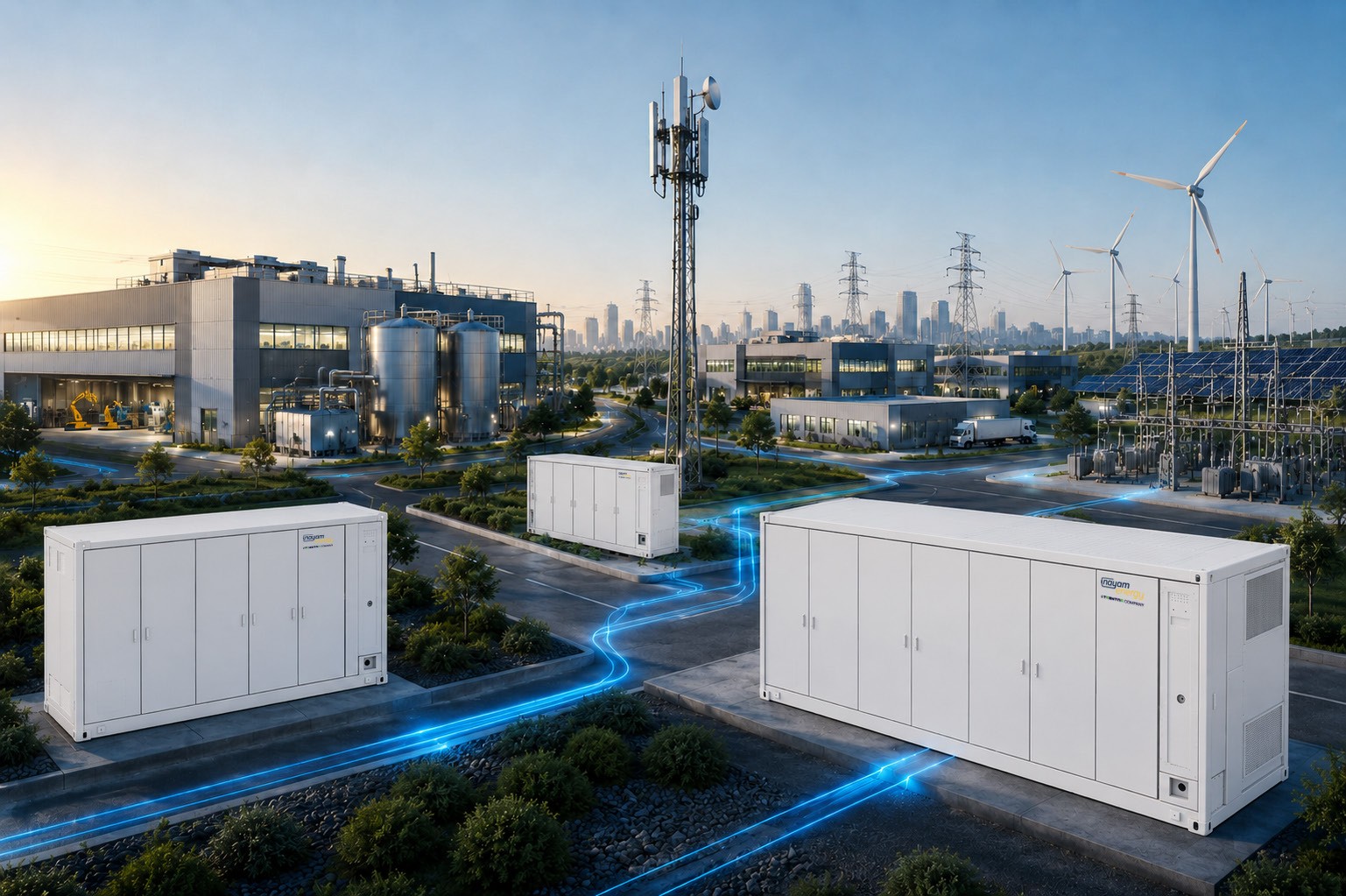
Telecom infrastructure runs on uptime. Towers and network sites need backup power that survives heat, grid instability, theft attempts, and years of unattended operation. Sodium-ion rack systems were engineered for exactly this duty.
Safe, simple, smart
The systems apply advanced sodium-ion technology from cell to pack, including four types of safety materials, three levels of safety structures, and six steps of safety controls. An intelligent BMS with a smart DC/DC module handles automatic management and charge control in a compact 3U or 4U rack design, and the batteries can operate in mixed use with existing VRLA or lithium-ion banks, with remote monitoring and automatic reconnect built in.
Secure and sustainable
A gyro sensor and anti-theft software lock render the battery output inoperative if a unit is removed, addressing one of the most persistent cost drivers in tower operations. At end of life, the chemistry is environmentally friendly and easy to recycle.
The numbers
Two models cover standard telecom racks: the HSDNaC4875 (48V, 3U, 38 kg) and the HSDNaC48100 (48V, 4U, 49 kg). Both are built on prismatic sodium-ion cells with a 15-year design life, at least 95 percent energy efficiency, 3,500 or more cycles at 80 percent depth of discharge, and discharge operation from -40 to 60 degrees Celsius.
For operators replacing lead-acid fleets site by site, the partnership between telecom and modern energy storage is not a future trend. It is already the economical choice.